Gaming PNG Sublimation Neon Paint: What It Offers and Where It Fits
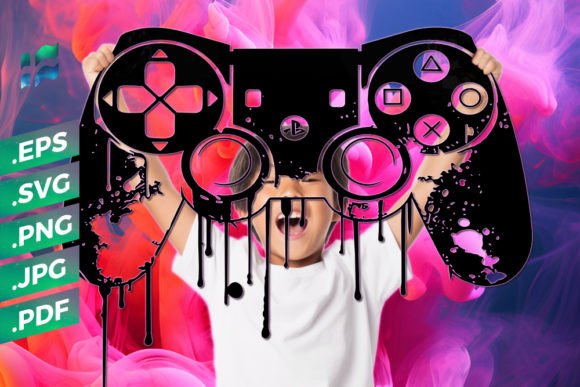
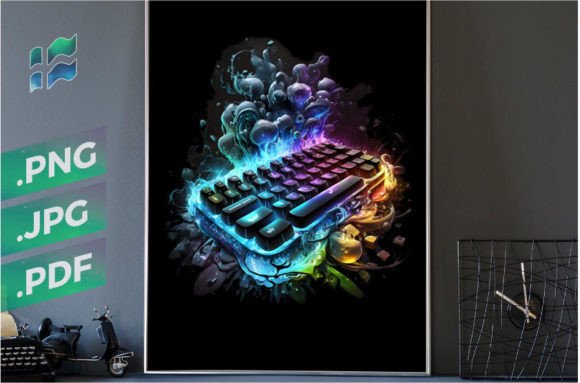
When someone searches for a gaming PNG sublimation neon paint file, they are usually chasing a very specific visual energy—bold, luminous brushstrokes or splatters that fuse digital sport aesthetics with the wearable results of dye-sublimation. The asset often arrives as a ready-to-use digital clipart bundle built around one central idea: a dynamic paint texture rendered in electric neon tones, mapped to a gaming theme, and structured so it can be pressed onto fabric, layered in design software, or dropped into a composition without tedious manual extraction. Understanding what this actually means for a working creative or a small business owner takes more than a quick glance at a listing. It requires evaluating the file package, the production realities, and the genuine place such an asset occupies in a commercial or personal project pipeline.
What Arrives in the Download
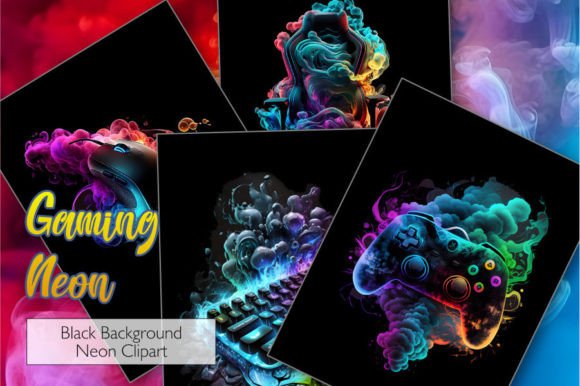
A typical delivery includes at least two core file types. The primary working file is a high-resolution 300 DPI PNG with a transparent background. That transparency is the functional backbone: it lets the neon paint element float over any colour, photograph, or textured surface without leaving a rigid border. For quick placement, compatibility, or preview purposes, a JPG file often accompanies the PNG. The JPG may be supplied at the same resolution but embedded on a solid background—useful when a lightweight file or a straightforward flat print is sufficient. Both versions share the same essential artwork: a gaming-inspired composition rendered in a neon paint style, with strokes, splatters, or silhouettes that mimic the behaviour of aerosol, acrylic, or liquid pigment under blacklight or on a dark substrate. Because the asset is marketed as digital clipart, the intention is not to deliver a single finished product but to hand over a flexible ingredient you can recombine, recolour, or resize to suit your own output.
Why Neon Paint and Gaming Aesthetics Connect
The neon paint treatment already carries strong cultural cues—arcade signage, esports graphics, late-night streaming overlays, and streetwear collections that borrow from cyberpunk or retro-wave palettes. When you overlay that on a gaming silhouette or controller shape, the asset immediately signals speed, reaction, and community. This matters because sublimation decoration often serves audiences who want to wear an identity. A neon paint visual does not need to be subtle; it leans into loud self-expression. In practical terms, an intense magenta, cyan, or acid green splash transfers well onto black polyester tees, hoodies, and tote bags because the sublimation ink bonds into the fabric and can retain that high-voltage saturation when colour management is handled correctly.
Practical Uses Across Different Creative Workflows
The real strength of a gaming PNG sublimation neon paint asset lies not in a single application but in how many directions it can travel. Creators who work across multiple project types tend to extract the most value. The file set is commonly relied upon to:
- Build merchandising mockups for t-shirts, hoodies, sweatshirts, and varsity jackets where the neon paint graphic sits as the focal art;
- Produce custom tote bags, drawstring sacks, and makeup pouches that appeal to a gaming-lifestyle audience;
- Generate vinyl sticker sheets by printing onto adhesive substrate, then cutting around the organic paint edges;
- Create event collateral such as tournament invitations, player cards, and social media announcements that need an energetic, screen-friendly graphic;
- Design printable decorations for game rooms, streaming backgrounds, or birthday parties where the neon effect amplifies the atmosphere;
- Produce iron-on transfers for small-batch apparel without a full sublimation setup;
- Develop Scrapbooking elements or journal covers for personal projects that want a distinct pop-culture edge.
In each case, the transparent PNG becomes the bridging element. For Canva users, dropping the PNG onto a dark background inside a template creates an instant layered composition. For Procreate and Photoshop users, the neon paint graphic can be duplicated, masked, colour-shifted, or blended with other textures to generate entirely new variations. The JPG often sees less action in highly layered workflows, but for simple one-pass prints or quick preview email attachments, it does the job without raising file-weight concerns.
Assessing Image Quality and Production Readiness
From a production perspective, the 300 DPI specification is the first checkpoint. At that resolution, the graphic holds enough pixel density to print cleanly at the physical dimensions listed by the supplier—commonly up to 12 or 14 inches in the longest edge, which covers standard apparel placements like a full front chest print or a back panel on a youth hoodie. The neon rendering itself needs to be examined for pixelation at the edges of splatters and for banding inside colour gradients. High-quality versions maintain smooth gradient transitions even when zoomed, and the transparency mask is crisp with no white halos around paint droplets. This matters because a halo becomes painfully visible when transferred onto black fabric. The best-prepared files are native raster graphics built at scale rather than upscaled clipart, which preserves the organic, fluid character of the paint strokes.
File consistency also plays into reliability. A creator who purchases the asset and returns to it months later to reprint a batch of mugs or to design a new Canva template should not find unexpected artefacts or colour shifts. When the file includes an embedded sRGB colour profile, what you see on a properly calibrated monitor is a reasonable preview of what the sublimation ink will deliver on polyester-coated substrates. Always keep in mind that neon colour gamut in RGB often extends beyond what CMYK or sublimation inks can reproduce; some vividness inevitably contracts. Testing on a small swatch before committing to a full run remains the sensible path.
Flexibility Inside Popular Design Environments
One of the less discussed but highly valued characteristics of a well-built gaming PNG sublimation neon paint asset is how little friction it introduces into software you already use. Because the PNG is transparent, it drops into Canva with no background removal needed. In Procreate, the file imports as a single layer that can be duplicated and adjusted with blending modes like “Add” or “Screen” to amplify the neon glow against dark backgrounds. Photoshop users can apply layer effects—outer glow, colour overlay, or gradient maps—without fighting a white box. Even basic word processors and presentation tools that accept PNG files can host the graphic for internal pitch decks or concept boards. The downside of a single flattened PNG, however, is that you cannot easily separate the paint splatters from the central gaming element unless the provider supplies layered variations. For most common applications, the flattened file is sufficient, but if you need to isolate a single controller silhouette, you may need to do some manual erasing or file splitting.
Who Benefits Most from This Type of Asset
Between the transparent file architecture and the niche gaming aesthetic, the value lands most directly in the hands of a few specific profiles. Small apparel brand owners who run print-on-demand stores or make-to-order garment lines can treat the neon paint graphic as a reliable design block that requires minimal rework before linking it to a product listing. Freelance graphic designers who juggle multiple client requests—a gaming cafe wanting a mural mockup, a streamer needing offline screen art, a charity tournament asking for volunteer badges—often keep collections of such versatile PNGs in their asset library because they speed up moodboard generation and first-draft composing. Educators and youth programme coordinators introducing sublimation printing techniques in makerspaces or creative workshops tend to favour pre-made graphics that give students an immediate successful result on a mug or a tote bag, building confidence before the learner moves on to original illustration. Bloggers and content publishers writing about gaming culture, tech, or DIY crafting insert the neon paint imagery into featured images, sidebar promotions, or tutorial headers without worrying about scaring away readers with amateurish design.
Realistic Limitations and Workarounds
No digital asset works uniformly in every scenario. With the gaming PNG sublimation neon paint, the neon effect’s visual impact depends heavily on substrate colour. It excels on deep blacks, charcoals, navy blues, and dark greys. Placing the same graphic on a white or pastel shirt often results in a washed-out appearance because the bright cyan and magenta lack the contrast to stand out. In those cases, using the asset as a print overlay on a darker transfer panel or applying a dark backing block in the design file can recover some punch. Additionally, while the PNG transparency is a major time-saver, it also means the paint splatters are not in vector format. Scaling the image well beyond its native resolution can introduce softness that undermines the sharp, liquid feel. For oversized wall graphics or billboard-sized sublimation panels, a vector graphic would be more appropriate, but a 300 DPI PNG still handles most garment and mug dimensions without issue.
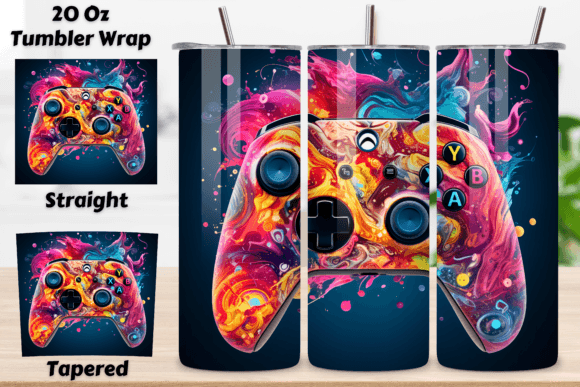
Another consideration is colour consistency across different sublimation blanks. A polyester fabric with a matte white coating reacts differently than a ceramic mug with a glossy polymer layer, and an aluminium sheet has its own colour response. The same neon pink that pops on a black t-shirt may appear slightly muted on a coated hardboard coaster. Production professionals address this by maintaining a proofing system: a small sample set of the artwork printed on each substrate type they regularly sell. Knowing the asset’s behaviour in advance eliminates surprises and customer complaints. Downloading a test press file or a small preview set—if the supplier offers one—is a smart qualification step before purchasing a bundle.
Long-Term Worth Inside a Commercial Creative Toolkit
Evaluating a clipart purchase through the lens of longevity changes the calculation. A single-use graphic that follows a fleeting meme cycle may have a short shelf life. A neon paint gaming asset, anchored in a broader aesthetic that has persisted across decades of gaming and streetwear culture, tends to retain relevance longer. The file can reappear year after year for seasonal collection drops, tournament merchandise refreshes, or updated social media campaigns. Even as you evolve your style, the raw graphic remains a malleable base that can be recoloured with different neon hues, blended with photographic textures, or abstracted further by cropping into smaller design elements. The 300 DPI PNG sitting untouched in your backup cloud storage does not expire, and because it does not rely on any subscription-based editing format, it remains accessible even if you switch design platforms.
Nevertheless, treating the asset as one ingredient rather than a finished solution is what separates frustrated dabblers from productive operators. It rarely suits a project right out of the folder without any adjustments. Adding your own typography, resizing the splatter for a specific print area, or tweaking the hue to match your brand palette—these small acts of customisation ensure the final product reads as yours, not as off-the-shelf clipart. When that integration flows smoothly, the gaming PNG sublimation neon paint file transforms from a static download into a quiet, dependable participant in your output. It sits among the handful of resources you actually reuse because it reliably saves an hour of painting, masking, or hunting for royalty-free visuals that do not really fit. That functional dependability, rather than any promise of creative magic, is what makes the file worth its place on a hard drive.