Unlocking the Humor and Versatility of “Party Means Play” Gaming Apparel Designs
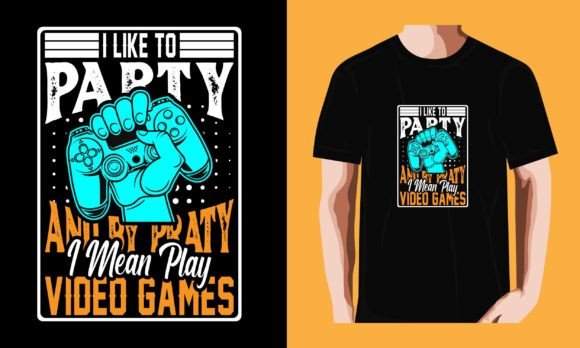
If you’ve scrolled through online marketplaces or gaming communities lately, you may have stumbled across a clever phrase that sparks instant recognition: “U like to party? And by praty, I mean play… video games.” At first glance, it reads like a typo-filled inside joke. But to millions of gamers, this line perfectly captures the modern social ritual of firing up a console or PC instead of hitting a nightclub. The saying has evolved into a popular gaming T-shirt design that blends self-aware humor with a strong sense of identity. In this guide, we’ll unpack the meaning behind the meme, explore why it translates so well onto clothing and other merchandise, and walk through the practical magic of the EPS, AI, and PNG files that turn a digital design into real-world products. Whether you’re a gamer looking for your next favorite shirt, a creator dabbling in print-on-demand, or simply curious about how a phrase like this becomes a wearable statement, you’ll find clear, useful insights here.
The Story Hidden in a Simple Gamertag Pun
The charm of “party means play” lies in its deliberate misspelling: praty is a phonetic, relaxed spelling of party, mimicking how many of us type and talk in casual gaming chats. The sentence intentionally blends two very different social spheres – partying as a nightlife activity and playing video games as a hangout alternative. By redefining “party” through a gamer’s lens, the design sends a clear message: I’d rather be gaming, and I’m not sorry about it.
For many, gaming is far more than a solo hobby. Voice chats, online lobbies, and cooperative gameplay create a sense of togetherness that rivals physical gatherings. The phrase taps into that feeling. When someone wears a shirt with this slogan, they aren’t just advertising a quirk; they’re inviting fellow gamers to share a knowing laugh and perhaps spark a conversation about their favorite title. It’s a gentle, humorous correction to the outsider assumption that gamers are antisocial. In reality, a Friday night party might just be a 12-player raid with friends spread across three continents.
Why the Design Works So Brilliantly on T-Shirts and Beyond
The jump from a funny line of text to an actual T-shirt graphic is no accident. Gaming humor has exploded as a fashion category, and slogans that embrace the “gamer lifestyle” strike a chord because they feel authentic. A gaming T-shirt design like this one succeeds on several levels:
- Relatability: Almost every gamer has, at some point, joked about preferring a gaming session over a loud party or crowded bar.
- Conversation starter: The visual pun naturally piques curiosity, making it a magnet for like-minded people at conventions, casual meetups, or even in a coffee shop.
- Subversion: It gently pushes back against stereotypes and proudly owns the fact that “playing” is the new “partying.”
This isn’t just a shirt; it’s a piece of identity cloth. And thanks to the provided EPS, AI, and PNG files, the design isn’t locked to one garment or product. The phrase can appear on mugs, pillows, bags, decals, card-making projects, and even digital backgrounds. The versatility of the file package means you’re not buying a single T-shirt – you’re gaining a design asset ready to personalize countless items that suit your style or business.
Understanding the File Trio: EPS, AI, and PNG
If you’re new to buying design files, the alphabet soup of extensions might feel intimidating. Let’s break down what each format offers and why having all three is a powerhouse for anyone who wants to produce high-quality merchandise or custom artwork.
EPS – The Universal Vector Workhorse
EPS (Encapsulated PostScript) is an industry-standard vector file. It’s made of mathematical curves and lines rather than pixels, which means you can scale the design to the size of a billboard or shrink it to fit a tiny decal without losing any sharpness or clarity. Professional printing services love EPS because it’s compatible with nearly every design software. When you send this design to a print shop for a T-shirt, hoodie, or even an embroidered cap, the EPS file ensures the text remains crisp and clean, whether it’s printed one inch or one foot wide.
AI – The Native Illustrator Source
AI files are the native format for Adobe Illustrator, one of the most common tools among graphic designers. This file often contains layers, editable text, and color information that makes customization incredibly straightforward. Want to change the phrase’s font? Modify colors to match your team branding? With the AI file, you can tweak every element without degrading quality. For those running a small online store or creating personalized gifts for a gaming clan, this editable flexibility saves time and unlocks creativity.
PNG – The Ready-to-Go Raster Hero
PNG (Portable Network Graphics) is a pixel-based image file, but with a superpower: transparency. The design usually lives on a transparent background, meaning you can drop it onto photos, mockups, or colored backgrounds without an ugly white box. While PNG files aren’t infinitely scalable like vectors, a high-resolution PNG (often 300 DPI or more) works perfectly for most digital and print applications. It’s the friendliest format for crafters using home cutting machines, for uploading to print-on-demand platforms, or for quickly previewing how the design looks on a mug or pillow.
When the bundle says “Perfect for use on – T-Shirts, Mugs, pillow, clothing, Bags, Decals, Card Making, background, illustration, and much more,” it’s this trio that makes that promise possible. Each file format fills a specific role, and together they give you complete freedom over the final product.
Practical Ways to Use the “Party Means Play” Design
Once you have the files, the only limit is your imagination. However, some applications are particularly popular and bring out the best in the design’s character:
- Apparel: T-shirts and hoodies are the obvious starting point. Use the PNG to create a mockup, then send the EPS or AI to a direct-to-garment printer. The result is a comfortable, conversation-ready piece that resonates with the gaming community.
- Mugs and drinkware: Gaming sessions often last for hours, and a custom mug with “I like to party” can be a humorous companion for coffee, energy drinks, or just staying hydrated. The vector files ensure the print wraps perfectly without distortion.
- Pillows and home décor: A throw pillow featuring the slogan adds a playful touch to a gaming room or home office. It’s a subtle way to express personality in a space that might otherwise be neutral.
- Bags and backpacks: Iron-on transfers or vinyl cuts made from the PNG file can turn a plain tote bag or laptop sleeve into a unique accessory. It’s lightweight, affordable, and acts as a flag for fellow gamers.
- Decals and stickers: Print the design on adhesive vinyl to create laptop decals, car window stickers, or controller skins. The vector’s scalability means one file can produce a tiny sticker for a smartphone and a large decal for a gaming desk.
- Card making and invitations: Host a game night or celebrate a gaming-themed birthday? Incorporate the design into invitations, thank-you cards, or party banners. The humor sets the tone immediately.
- Digital backgrounds and illustrations: Social media banners, YouTube thumbnails, or Twitch overlays can integrate the phrase as a badge of identity. A transparent PNG makes layering effortless.
These varied uses show that a single clever concept can become a whole ecosystem of personal expression. It’s no wonder that designs like this are often sold as complete gaming T-shirt design bundles, ready for non-commercial and even small-business commercial use.
The Deeper Connection: How Gaming Culture Embraces Humor Fashion
Humor has always been a glue in digital communities. Inside jokes, emotes, memes, and slang create bonds that transcend geographical borders. What we wear acts as an extension of those digital identities. When a person sees “U like to party?” on a shirt and immediately understands the playful twist, a silent nod of solidarity occurs. This phenomenon isn’t random; it reflects a broader shift where personal interests – gaming, coding, tabletop RPGs – are worn as proudly as sports jerseys were a generation ago.
From a business perspective, this shift explains why marketplaces like Etsy and Redbubble overflow with gaming-inspired clothing. The demand goes beyond simple fan art; people want wearable declarations of their hobbies. Designs that cleverly remix language feel especially authentic because they mimic the voice of the community itself. The “praty” spelling isn’t a mistake – it’s a deliberate stylistic choice that signals membership. It’s the difference between a corporate slogan and a friend’s text message.
There’s also a practical layer: today’s print-on-demand technology makes it possible for independent artists to offer dozens of products without holding inventory. High-quality source files – exactly like the EPS, AI, and PNG bundle described – fuel this ecosystem. A designer creates the artwork once, and customers can apply it to any number of items instantly. The consumer wins by getting a product that feels custom-made, and the creator builds a brand around relatable humor.
Common Misunderstandings and How to Avoid Them
While the appeal of such designs is broad, newcomers sometimes stumble over a few points. Let’s clear those up so you can use the files confidently.
- “Vector vs. raster” confusion: People occasionally assume a PNG can be blown up to any size without quality loss. While PNG is fantastic for many uses, only the EPS and AI files are truly resolution-independent. For large prints, always use the vector versions.
- Licensing assumptions: Purchasing the design files usually grants a specific license. Some bundles allow commercial use (selling shirts with the design), while others are for personal projects only. Always check the terms included with the download to avoid legal headaches.
- Font and color edits: The AI file is your best friend for customization, but it may require Adobe Illustrator or a compatible program like Affinity Designer. Free software like Inkscape can often open EPS files, but layer structure might not always transfer perfectly. A little learning goes a long way.
- “The design looks blurry on my screen.” This can happen with vector files because they display as a low-resolution preview in some systems. The actual output, when printed or exported correctly, will be razor-sharp. Trust the math, not the thumbnail.
By understanding these nuances, you’ll save time and avoid frustration, whether you’re making a single gift or launching an entire product line around the “party means play” concept.
Bringing It All Together: Your Next Creative Step
A phrase like “I like to party and by praty I mean play video games” is more than a catchy slogan. It distills a lifestyle, a shared understanding, and a gentle rebellion against the idea that fun must fit a traditional mold. The accompanying EPS, AI, and PNG files serve as the bridge between that idea and physical reality. They empower you to create something that truly feels like yours, whether it’s a cozy hoodie that sparks a smile at a family gathering or a sleek sticker that personalizes a gaming setup.
If you’re a gamer, wearing or displaying this design is an invitation to connect. If you’re a creator, the files give you the raw materials to build merchandise that resonates deeply with an audience that values wit and authenticity. And if you’re just starting to explore the world of printable designs, this bundle exemplifies exactly what to look for: a great concept, multiple usable formats, and infinite application potential.
The next time someone asks if you want to party, you’ll know exactly how to answer – and now you’ll have the perfect gear to prove it, too.