Why “Gaming the Only Legal Place to Kill Stupid People” Resonates and What to Know Before You Print
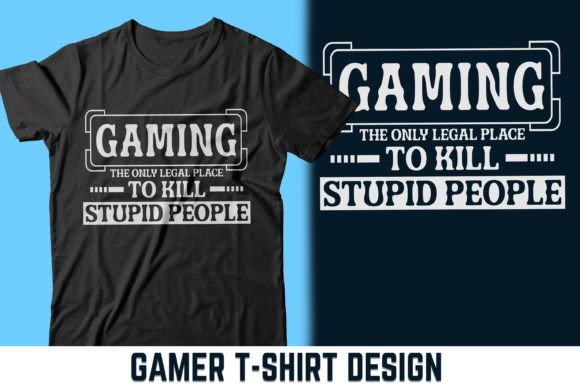
Funny how a phrase can stop your scroll. Gaming the Only Legal Place to Kill Stupid People isn’t just a string of edgy words. It’s a cultural inside joke that anyone who has ever raged at a teammate, laughed off a ridiculous in-game death, or bonded with friends over chaotic multiplayer moments understands instantly. The saying captures a universal truth about competitive gaming: sometimes, the best way to deal with frustration is to respawn and take it out on the digital world. That snarky, cathartic energy has found a natural home on apparel, and the “Game lover v2” design file exists to help creators turn that sentiment into a tangible product.
But here’s the catch. A clever slogan doesn’t automatically make a great t-shirt. The gap between a funny idea and a wearable, sellable, or giftable item lies entirely in how you handle the digital file. Many beginners and even seasoned sellers stumble on details that seem minor until they hold a faded, peeling, or poorly aligned print in their hands. Let’s talk about the real-world friction points that can turn a promising design into a disappointment.
The Misunderstood Power of a Ready-to-Print File
You might assume all digital design files work the same way. They don’t. The file described as Gaming The Only Legal Place To Kill Stupid People. gaming t-shirt design. Game lover v2 comes with specific technical specifications that matter more than the average buyer realizes. When you see “AI 10, EPS 10, PNG 4500×5400px at 300 dpi, and a high-quality JPG,” that’s not just a checklist. It’s a survival kit for different printing scenarios.
A common mistake is grabbing the PNG or JPG and assuming that’s all you need. Those raster formats work well for direct-to-garment (DTG) printing or mockups, but they have a fixed resolution. If a print shop asks for a vector file to scale the design for a large hoodie back print, sending the JPG creates an immediate bottleneck. The shop might stretch a pixel-based image, leading to soft, blurry edges that scream amateur. That’s where the AI and EPS files become non-negotiable. They contain 100% vector shapes, meaning the design can resize from a mug decal to a wall banner without losing a single crisp edge.
Overlooking Transparency Can Ruin Dark Fabric Prints
Picture this. You download the file, pick a sleek black sweatshirt, and send the design to print. The preview looks fine on your screen because many image viewers display transparent backgrounds as white or a checkered grid. You assume the printer software will handle it. The result is a stiff, white rectangular box around your slogan on that dark fabric. The design looks like a sticker patch, not a professional print.
The description specifically mentions “Transparent backgrounds” for a reason. Print-on-demand platforms and professional screen printers need that transparency layer to isolate the ink directly onto the fabric. Before you commit to a batch of mugs or hoodies, always verify that your chosen platform reads PNG transparency correctly. For vector files, double-check that no hidden background layer exists. A quick test: open the PNG in a program that supports layers and confirm the checkered pattern shows behind the text and graphics. Skipping this step leads to wasted blanks and angry customers.
The Color Changer Trap: Flexibility Without Discipline
“100 color changeable” is a fantastic feature. It means you can match the design to a specific sports team palette, a trending aesthetic, or a customer’s custom hoodie request. But infinite choice invites a classic error: prioritizing personal taste over contrast and legibility.
Imagine turning the entire slogan into a pastel yellow and printing it on a white t-shirt. At first glance, it might look soft and trendy. From three feet away, it becomes unreadable. The humor of “Gaming the Only Legal Place to Kill Stupid People” relies on that immediate verbal punch. If someone squints to read it, the joke falls flat. Always test your color variations on a screen background that matches the intended fabric. Dark text on light shirts performs reliably. Light text on dark shirts works, but avoid thin, low-contrast strokes. If you are selling on a marketplace, your photos of an unreadable design won’t convert into sales, no matter how clever the phrase.
Choosing the Wrong Blank for the Message
The t-shirt itself communicates status and genre before anyone reads the text. Slapping this edgy, gamer-centric slogan on a thin, boxy, budget tee creates a dissonance the customer feels immediately. The fabric pills after two washes, the collar stretches, and the premium humor sinks to “novelty joke item” status. That perception tanks repeat business.
A better approach treats the blank garment as part of the experience. Ring-spun cotton, triblend fabrics, or a midweight crewneck all whisper quality when someone touches them. Retail-quality hoodies and soft fleece sweaters elevate the print from a throwaway gag to a staple piece in a gamer’s wardrobe. If you plan to offer sweaters or jumpers as the file description suggests, test a sample first. See how the design sits across the center seam. Large-scale prints on thick sweatshirt material sometimes require slight adjustments in placement compared to a flat t-shirt.
Ignoring Document Dimensions and Color Profiles
The technical note “Document Size 4500X5400px, Color mode RGB” is not a casual afterthought. Many designers work in CMYK for traditional offset printing, but most t-shirt print-on-demand platforms and direct-to-garment printers operate natively in RGB. Submitting CMYK files can shift neon greens into muddy olives. The humor in this gaming design often plays well with bold, electric colors. Converting unnecessarily dims that visual punch.
The 4500 by 5400 pixel resolution at 300 dpi provides a generous canvas. You can scale down without issues. Problems arise when someone tries to enlarge a low-resolution web image and wonders why the edges pixelate. You won’t face that with this source file unless you ignore the included vectors and stubbornly work with a tiny preview thumbnail. When printing across larger objects like pillows or wide hoodie backs, lean on the AI or EPS vector versions. They future-proof your work against any print size requirement a customer might throw at you.
Practical Ways to Avoid Licensing and Usage Blunders
Having a digital file and owning the right to print it commercially are two different things. The description focuses on technical specs but always verify the license attached to the original purchase. If you plan to sell printed t-shirts, mugs, or pillows on Etsy, Shopify, or at conventions, make sure the license covers physical end products for resale. Some designers restrict commercial use, and misunderstanding that fine print can lead to takedown notices.
- Start small and test: Print one sample shirt and wear it through several wash cycles. Check if the print cracks, fades, or holds up.
- Mockup honestly: The file description warns that mockups are not included. When you create your own, don’t artificially stretch the design to look bigger on a mockup than it actually prints. Misleading product photos generate returns.
- Respect the ZIP extraction: The files arrive compressed. A surprising number of people try to open them directly inside a preview window without extracting. Use WinZIP, WinRAR, or the native extraction tool. Working from an extracted folder prevents save errors and lost transparency data.
When the Message Outshines the Medium
Humor can be a double-edged sword. “Gaming the Only Legal Place to Kill Stupid People” lands perfectly with the right audience. It flops with the wrong one. Wearing this statement to a family reunion, a formal casual workplace, or a mixed-age social event might invite uncomfortable conversations. That’s not a design flaw; it’s a context consideration. As a creator or buyer, think about where the garment will be worn. For sellers, positioning the product clearly as gamer humor for esports fans, streamers, and competitive gaming communities helps attract buyers who genuinely appreciate the joke. Avoid vague lifestyle marketing that strips away the context. A direct, unapologetic niche focus outperforms broad, watered-down appeal every time.
Printing on mugs follows the same rule. A mug with this slogan sits on someone’s desk during a video call. The camera might pick it up. Some customers love that rebellious edge. Others might not realize the visibility until it’s too late. Thoughtful marketing includes a simple product shot showing the design’s actual size on the mug so no one expects a full-wrap explosion of text.
What to Check Before You Hit Buy or Print
Let’s move beyond surface-level excitement and into practical verification. Before committing that file to a $300 hoodie order or launching a new product listing, run through a lean quality-control checklist.
First, open the AI or EPS file in vector editing software. Even if you don’t plan to edit it heavily, confirm the shapes are indeed vector. Ungroup elements and check for any raster images embedded inside. The description promises 100% vector shapes, but a quick peek prevents surprises.
Second, compare the PNG and JPG exports at full resolution. Are the edges of the letters razor-sharp? Any fuzziness means the export settings were off, or the file was upscaled illegally. For DTG printing, sharp edges translate directly to crisp ink placement.
Third, prepare a test mockup on multiple color backgrounds. A simple black mockup, a heather gray mockup, and a white mockup reveal readability issues instantly. Adjust the text color using the editable feature until the contrast feels effortless. The phrase loses all its dry wit if someone has to strain to decipher it.
Finally, name your derivative files intelligently. Instead of saving everything as “final_version2.png,” label by product and color: “Gaming_Only_Legal_Place_White_Text_BlackHoodie.png.” This basic organizational habit saves hours of re-exporting when a customer asks for a specific combination you already built.
The design file exists to cut out the guesswork. It handles the hardest part: clean vectors, transparent backgrounds, and high resolution. The rest falls on you. When you match technical precision with smart product choices, that sarcastic, truth-telling slogan becomes more than a funny shirt. It becomes something people reach for when they want to signal exactly what kind of gamer they are.