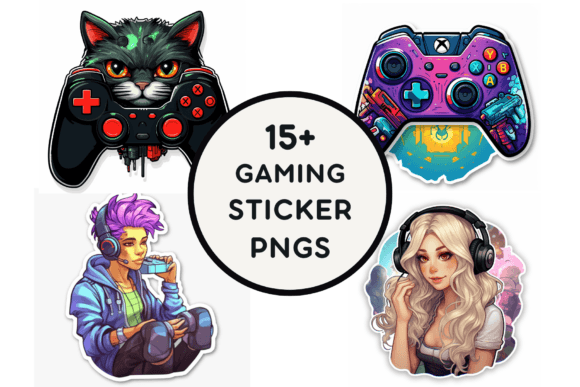
Unlock Crisp, Custom Designs with 15 Gaming Sticker PNGS
You have a digital project that needs personality—maybe a stream overlay, a custom phone case mockup, or branded merch for your clan. You found a pack of 15 Gaming Sticker PNGS and it looks promising. But grabbing a pack of transparent images is just the first step. How you choose, prepare, and apply them determines whether your final design looks professional or sloppy. Too many creators and small business owners skip crucial checks, only to wonder why their print came out blurry or the file clashed with their editing software. Let’s fix that. This is a practical walkthrough to help you avoid the common, silent missteps and actually level up your visual game.
What 15 Gaming Sticker PNGS Actually Delivers
At its core, 15 Gaming Sticker PNGS is a digital download bundle containing fifteen individual illustrations. Each file is saved as a PNG with a transparent background, usually at a robust 2000 x 2000 pixel resolution. The theme pulls from gaming culture: think controllers, headsets, pixel swords, D-pads, energy potions, and cheeky chat icons. Because they are transparent, you can place them over any background without an ugly white box ruining the composition. The listing often emphasizes commercial use and printability, which widens their appeal beyond casual streams. Bloggers designing a gaming-themed printable planner, marketers creating esports tournament flyers, or educators making engaging classroom badges all find value here.
The interest isn't just about decoration. A clean, high-resolution PNG lets you mock up products for an online store without hiring an illustrator. A freelancer can brand a client’s social media header in minutes. A hobbyist can personalize a laptop skin layout before committing to a costly printing service. But assuming all PNGs are ready for every task is where the frustration begins.
The Hidden Trap of Resolution Misunderstanding
The most seductive detail is the 2000 x 2000 pixel specification. That number feels safe. The mistake is thinking “2000 pixels” equals “unlimited clarity” or that it's ideal for every surface. A 2000-pixel square image printed at 300 dots per inch (DPI) gives you only a 6.67-inch physical sticker. That’s decent for a phone case or a small notebook decoration, but if you stretch the same file to fill a T-shirt chest print or a poster, you are upscaling, and the edges will turn soft and pixelated. I’ve seen a small business owner print a gaming PNG at t-shirt size straight from the download, then wonder why the once-sharp sword looked like a watercolor bloom.
Better approach: Before you even open the file, define your output size. If you need a 10-inch tall decal for a car window, that 2000-pixel canvas falls short for 300 DPI work. You can still use it, but you must accept a lower DPI or resize the image in a smart, vector-aware tool (or use AI upscaling carefully, as it can distort fine gaming details like button icons). For digital screens, your safe zone is huge. A 2000-pixel PNG is far larger than most social media banners need, so you can shrink it without quality loss. The reverse is never true.
Ignoring the Transparent Edge Artifacts
Another subtle error is assuming every transparent PNG has a perfectly clean cut-out. When designers create these packs quickly, some files retain feint, semi-transparent ghost pixels around the edges—especially around complex curves like a controller grip or a spiky speech bubble. On a white website background you won’t notice. But the moment you place that “gamer rage” skull sticker on a dark navy tote bag mockup, a pale halo glows around the design. It looks unprofessional and screams clip art.
Don't just preview the file in your browser. Open it in your editing software and place it over a dark solid color layer temporarily. Zoom in. If you see a light fringe, remove it with a defringe or layer matting command (most tools offer “Remove White Matte” or a simple one-pixel layer mask contraction). This extra sixty seconds saves your brand’s visual credibility. For entrepreneurs, that sticker might represent your entire shop’s design quality. A halo is a silent trust killer.
License Loopholes Can Sink Your Business
The term “commercial use” feels reassuring, but it is not a universal pass. The typical 15 Gaming Sticker PNGS listing allows you to use the images on products you sell, like printed stickers, mugs, or digital planning templates. The mistake is assuming that includes reselling, redistributing, or even heavily sublicensing the original PNG files themselves. You cannot simply bundle them into another digital pack and resell them on Etsy as your own. Similarly, using the images as a logo mark can be risky if the license doesn’t grant trademark rights. A client once used an esports heart PNG as their streaming logo, only to find the same graphic on a competitor’s channel a week later. You don’t own the design; you license its use.
Before clicking that download button or using the files in a project that generates revenue, read the license document that comes inside the zip folder. Look for restrictions on items for resale, print-on-demand platforms, or use in trademarks. If the language is vague or missing, message the creator. For a small business owner, acopyright strike from a print-on-demand platform like Merch by Amazon can permanently ban your account. That’s not worth a five-dollar sticker pack.
Poor File Organization Wrecks Workflow
You download a zip. Inside, fifteen PNGs are named “sticker_01.png” through “sticker_15.png.” One month later, when you need just the rage skull for a Twitch banner, you’re clicking through thumbnails blindly, wasting minutes. Worse, if you’re collaborating with a team, those cryptic names cause confusion and slow down approvals. The “gaming” sticker style often includes silhouettes and icons that are hard to distinguish at a glance in a file browser.
Rename your files immediately. Use descriptive, searchable terms: “controller-neon-green.png,” “headset-cyberpunk-blue.png,” “chat-bubble-gg.png.” Add a prefix if it helps, like “GAMING_STICKER_” for easy filtering. If you plan to print, create a separate folder for print-ready versions where you’ve checked resolution, color profile (CMYK for physical printing, not just RGB), and edge bleed if your printer requires it. Organization is a quiet form of self-care that prevents costly reprints.
Neglecting Color Mode and File Optimization
Digital projects stay in RGB mode naturally. But if you use these 15 Gaming Sticker PNGS to create actual printed stickers, skipping the conversion to CMYK is a classic heartbreaker. That vibrant neon blue on screen can turn into a muted, dull hue on paper because CMYK gamut is smaller. The fluorescent “energy drink” pink that looks stunning on a phone screen might print as a flat, chalky pastel. Always soft-proof the design first. Many sticker printing services provide an ICC color profile. Use it. Even better, order a test sample print before ordering 500 units for your Etsy shop.
On the flip side, loading a 2000 x 2000 pixel, 3MB file directly into a website without compression is a mistake for digital use. A blog post with five such stickers bloats page load time, hurting SEO and user experience. Use a lossless or slight lossy compression tool (like TinyPNG) to knock the file down to a few hundred kilobytes without visible quality loss. Google’s Core Web Vitals now directly influence search rankings. A heavy PNG pack silently drags your site score down.
Forgetting the Context: Not Every PNG Fits Every Vibe
Because the pack is labeled “gaming,” there’s a temptation to scatter all fifteen stickers across every piece of content. A professional esports coaching business probably doesn’t need a cartoon “noob” chat icon on their intake form. A game developer’s serious investor pitch deck shouldn’t feature a neon “NEWBIE” badge. Each sticker carries a tone. Some are aggressive and angular; others are soft and meme-like. Pulling three or four that match your specific subculture—retro pixel art, modern FPS, cozy Stardew-like—creates a stronger, curated brand identity than a chaotic mashup. Less really is more when you want to look intentional.
Think about the end user. If you’re a blogger writing a guide for parents about gaming safety, a cute controller and a wholesome shield icon reinforce the message. That gritty skull with crosshair eyes might alarm the very audience you’re trying to reassure. Build a mood board before slapping PNGs onto your layout.
Practical Checks Before You Use or Buy
With so many sticker packs sold online, how do you avoid regret? First, scrutinize the preview images. Are there actual close-ups of the transparent edges on a dark background? If the seller only shows the stickers on a white canvas, that’s often a red flag for those ghosting artifacts we talked about. Second, verify the file format. A pack that incorrectly labels JPEGs as transparent PNGs still happens. Third, check for consistency. One 2000px file and fourteen 800px files inside the same pack is a bait-and-switch; you’ll get a blurry mess when you try to scale them.
Open a test file in a free program like GIMP or Photopea immediately after download. Check the actual canvas size and the layer information. A single locked background layer means it’s not a true transparent PNG, just a cleverly saved image. If you see that, request a refund or fix it.
Finally, for creators, always keep your raw design file. If you use the 15 Gaming Sticker PNGS in a composition, save a layered, editable version before flattening for web or print. You may need to adjust the placement or scale later for a different format, and redoing the work from scratch is a productivity drain. These tiny habits compound into a much smoother creative process.
These gaming sticker PNGs are genuinely useful assets when treated with the same care you’d give any design element. They save time, add polish, and can even spark new merchandise ideas when you see them on a mockup. The difference between a sloppy, pixelated paste-up and a crisp, cohesive visual lies in your prep. Check your resolution needs, strip those phantom edges, honor the license terms, and match the tone to your audience. The result isn’t just a sticker on a screen—it’s a visual level-up your community or customers will actually feel.