Dad Level Unlock Funny Gaming Shirt PNG: Avoid the Hidden Pitfalls That Ruin Custom Apparel
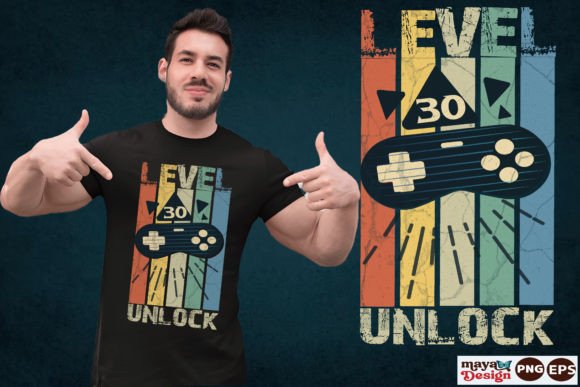
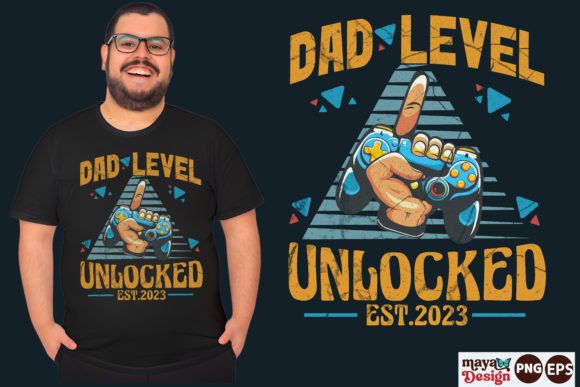
You’ve found the perfect design: a humorous “Dad Level Unlock” graphic that captures every gamer-parent’s inside joke. The PNG is crisp, the idea is solid, and you’re ready to print it on a hoodie or mug for Father’s Day. But before you click that download button, there are several quiet missteps that can turn a premium digital file into a blurry mess, a wasted transfer sheet, or a design that cracks after one wash. Understanding what the Dad Level Unlock Funny Gaming Shirt PNG actually delivers—and what it doesn’t—will save you time, money, and a lot of frustration.
This isn’t just a novelty image. When used correctly, these high-resolution 4500×5400 pixel graphics at 300 DPI become a versatile tool for creating gifts that feel professionally made. They work on t-shirts, mugs, tote bags, decals, posters, and even engraved tumblers. But many people skip the crucial details hidden in the product description, then wonder why their final project looks amateurish. Let’s walk through the most common misjudgments and exactly how to get the vibrant, long-lasting result you have in mind.
What’s Actually Inside That ZIP Folder
First, clarity. When you purchase this Dad Level Unlock Funny Gaming Shirt PNG, you’re not receiving a physical shirt or a mockup photo. You’re downloading a compressed archive that contains two essential file types: an editable EPS (vector) file and a print-ready transparent PNG at 4500×5400 pixels, 300 DPI. The transparent background is a huge plus—it means you can place the design on any colored fabric without a white box around it. But that very transparency often leads to the first big error.
Mistake 1: Assuming transparency means it will print perfectly on dark garments without any adjustments.
Why this backfires: Most home inkjet transfers and even some direct-to-film processes won’t print white ink. If you’re using a standard inkjet printable transfer sheet and apply it to a black t-shirt, the “Dad Level” lettering will disappear because your printer doesn’t lay down opaque white. The design relies on the white of the shirt to show through. On dark fabrics, those areas become invisible.
A better approach: Identify your printing method first. For dark shirts, go with sublimation only if you’re working on a polyester fabric with a white base layer, or use printable heat transfer vinyl that comes pre-backed with a white adhesive. If you’re sending the design to a print-on-demand service, check whether they offer DTG (direct-to-garment) with white underbase. The PNG alone doesn’t guarantee dark-shirt compatibility; your application method does.
The EPS Trap: Why “Editable” Isn’t Always Drag-and-Drop Simple
Seeing “editable EPS file” in the listing makes you think you can just double-click and start tweaking. For many users, that’s not the case. EPS is a vector format that requires compatible software like Adobe Illustrator, CorelDRAW, or free alternatives like Inkscape. Opening it in a raster program like Photoshop will rasterize the text, losing the smooth scalability that makes vectors valuable.
Mistake 2: Trying to open an EPS in software that doesn’t support vectors and then scaling it up for a poster. The result: jagged edges and pixelation, even though the original file was perfectly sharp.
Practical fix: If you don’t know your way around vector paths, lean on the PNG version—it’s already a massive 4500×5400 pixels at 300 DPI, which can print up to 15×18 inches without resampling. That’s more than enough for a full-front t-shirt or a large tote. For a poster, stick with the EPS and use the correct program. If you only need minor text edits, the EPS lets you change “Dad” to “Grandpa” or add a gamer tag without losing quality.
Also, pay attention to fonts. The EPS text may be outlined, meaning it’s converted to shapes and you can’t type new words in the same font style unless you match it separately. That’s not a flaw—it’s a common design practice to avoid font licensing issues. When you edit, treat it like graphic shapes, or find a similar gaming-style font to maintain the look.
Resolution Misunderstandings That Kill Print Quality
4500×5400 pixels sounds enormous, but resolution alone doesn’t guarantee a crisp result. DPI (dots per inch) matters relative to print size. At 300 DPI, a 4500-pixel width gives you 15 inches. Push that to a 20-inch-wide print, and the effective DPI drops to 225, which might still look fine on fabric but will appear slightly soft on a smooth surface like a mug or hardcover notebook.
Mistake 3: Assuming “high resolution” means you can print it at any size. Enlarging beyond the intended dimensions without vector scaling introduces interpolation blur. With the PNG, stick to the natural 15x18-inch maximum for photo-quality output. If you need a larger poster, use the EPS and scale it infinitely without loss.
Watch your cut settings too: For vinyl cutting machines like Cricut or Silhouette, the 300 DPI PNG is fine for tracing outlines, but you’ll need to clean up any rough edges that automatic tracing software creates. Many people skip the smoothing step and wonder why their decal looks jagged around the lettering. A quick node edit in Silhouette Studio or a “smooth” function can fix that in seconds.
How the Wrong Color Mode Can Drain the Humor Out of Your Design
Digital designs often live in RGB color space, while professional printing uses CMYK. The difference might seem subtle on screen, but a neon green gaming controller or a vibrant arcade-style glow can turn muddy when converted. This Dad Level Unlock Funny Gaming Shirt PNG is typically provided in RGB, which is perfect for screen display and some home printers. But if you’re taking this to a local print shop or using a print-on-demand service, they might require a CMYK file for accurate color reproduction.
Mistake 4: Not asking your printer about color profile requirements. Sending an RGB file to a CMYK workflow without conversion can cause dull oranges, unexpected purple shifts, and loss of contrast—draining the very punch that makes the humor pop.
Smart move: Before placing the order, convert the PNG to CMYK in a program like Photoshop or GIMP and preview the change. You can often adjust saturation to compensate. Some online printing platforms auto-convert but with varying quality, so doing it yourself gives you control. If you’re printing at home on an inkjet, stick with RGB; modern inkjets handle it beautifully.
Decal Design Details: Weeding, Layering, and Thin Lines
The “Dad Level Unlock” text often includes playful controller graphics, pixelated hearts, or level-up arrows. While charming, delicate parts like thin outlines or tiny gaps can be a nightmare to weed after cutting. If you’re making a vinyl decal for a car window or laptop, those fine details might tear or not adhere well over time.
Mistake 5: Using the design as-is for intricate cut files without adjusting stroke weights. What looks fantastic on a t-shirt might be too fragile for a permanent adhesive vinyl decal.
Avoidance tip: Open the EPS or even the PNG in your cutting software and use an offset tool to slightly thicken narrow elements, or remove tiny islands that will peel off during transfer tape application. Alternatively, reserve highly detailed cuts for smooth, flat surfaces like ceramic mugs where weeding is less risky. For rough or curved surfaces, simplify the design or use a kiss-cut method with a solid background shape for stability.
When “Instant Download” Meets Perplexing Licensing
Most sellers offer a personal and limited commercial use license by default, but specifics vary. Buying a Dad Level Unlock Funny Gaming Shirt PNG and then mass-producing shirts to sell on Etsy without checking the terms can lead to copyright strikes or awkward exchanges. While the description focuses on its use as a “gift for family, friends, or coworkers,” many buyers want to expand. Don’t assume you can use it on merchandise you sell.
Mistake 6: Believing you own the copyright because you purchased the digital file. You’re typically purchasing a usage license, not the underlying intellectual property. The creator retains rights unless a full buyout is specified.
What to do: Before designing items for resale or donating the file to a community fundraiser, read the license or contact the seller. Some digital artists extend print-on-demand commercial rights for a small upgrade fee. Others restrict it entirely. Get clarity, especially if you’re running a small business.
Mockup Disappointment: Why Your Shirt Doesn’t Look Like the Listing Photo
The product page may show a crisp model wearing a shirt with the design perfectly placed, but the fine print states mockups aren’t included. That listing image is a digital composite to show potential, not a photograph of an actual printed garment. This trips up first-time buyers who expect a preview template or a ready-to-print file with the apparel background.
Mistake 7: Not understanding that you receive the graphic element only, not the shirt texture, lighting, or folding effects. When you go to create your own presentation or visual reference, you start from scratch.
Workaround: Use free mockup generators or purchase a separate t-shirt mockup template that lets you insert the PNG on a smart object. This gives you a realistic preview to share with your customer or just to see how the design placement feels. Without it, you might print the graphic too large or too low on the chest because you lacked a proper spatial reference.
Making the Most of Your Download: Practical Workflow Checkpoints
Before you hit print or feed your cutting machine, run through a quick checklist. Verify the file dimensions match your project requirements—4500×5400 pixels is not a standard shirt proportion, so you’ll likely need to reposition and perhaps trim surrounding blank space. Check that your software is installed and updated to avoid EPS import errors. If you’re using the transparent PNG, double-check the final background on your screen against the actual garment color; some printer drivers add a faint white bleed that looks fine in preview but prints noticeably.
Finally, remember that the same design can be adapted far beyond a tee. With a little creativity, you can scale the graphic for a political-style campaign poster (“Vote Dad: Unlock Snacks”), a coffee mug for the office, a tote bag that carries game night essentials, or even—using iron-on transfer—a denim jacket patch. The flexibility is immense, but only if you respect the technical boundaries of each medium.
So yes, the Dad Level Unlock Funny Gaming Shirt PNG is a brilliant starting point. The 300 DPI transparency and editable EPS give you a professional-grade asset. But the difference between a throwaway craft and a treasured gift lies in how you handle resolution scaling, color conversion, substrate compatibility, and licensing. Go ahead and download, but walk through each of these checkpoints. Your tired-gamer dad will thank you with a laugh every time he puts on that perfectly executed shirt.