Mouse Monogram, Gaming Mouse Silhouette Design: From Screen to Real-World Projects
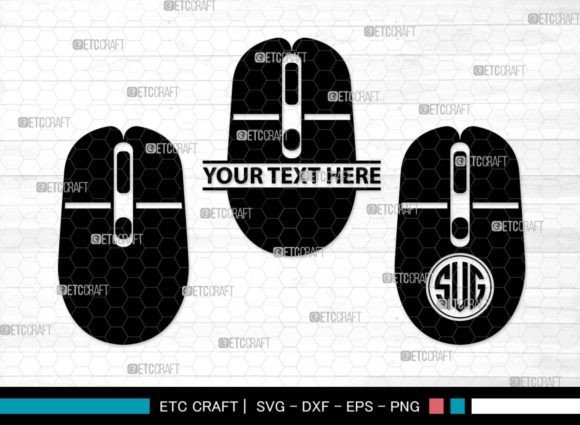
You’ve probably seen the clean, sharp outline of a computer mouse paired with a bold monogram letter—a graphic that speaks quietly and directly to gamers, streamers, tech enthusiasts, and anyone who spends their day in front of a screen. The Mouse Monogram, Gaming Mouse Silhouette captures that identity in a single, recognizable shape. It’s not just an image you look at on a device. People download this design because they intend to make something with it—a shirt, a mug, a sign, a piece of decor that feels personal without being loud.
When you get the files, you’re not limited to one machine or one method. The download includes SVG, DXF, EPS, and PNG formats, so the design works with a Silhouette, Cricut, Brother Scan and Cut, or really any cutting machine that reads vector or high-resolution raster files. That format selection matters because it removes the headache of converting or tracing. People can open the file and start cutting, printing, or sublimating right away. The design itself—a sleek gaming mouse silhouette often combined with an initial or monogram letter—slides easily into projects meant for sublimation, adhesive vinyl, heat transfer vinyl, or printed transfers. And yes, the physical things you create are yours to keep, gift, or sell. The digital files themselves stay with you; sharing, reselling, or redistributing the design digitally isn’t allowed, but using them to produce actual goods is exactly what they’re for.
Who Actually Uses This Kind of Design—and When
Most people don’t wake up thinking they need a gaming mouse monogram. They stumble into a situation where it simply fits. A friend’s birthday is coming up, and that friend practically lives in their gaming chair. A small business owner realizes their customer base overlaps heavily with PC gamers and wants a subtle, low-key way to offer relevant merch. A streamer needs a recognizable emblem for a giveaway item that doesn’t scream “logo overload.” The design destination isn’t a folder on a hard drive—it’s a finished physical object someone will wear, hold, or hang on a wall.
What makes this silhouette work across those situations is how flexible it stays. The shape of a gaming mouse is instantly readable, but it’s not cartoonish. Paired with a single letter monogram, it turns generic into personal. A mom cutting a vinyl decal for her teenager’s laptop gets the same clean result as an entrepreneur pressing a run of fifty mugs for an esports tournament. The design scales without losing meaning. You can shrink it to fit a koozie or enlarge it for a back-of-hoodie statement, and the silhouette still reads clearly.
Gear That Represents Someone Without Using Words
Think about the everyday objects where a small monogram makes a difference. A water bottle on a desk during a streaming session. A hard-shell luggage tag for someone who travels to gaming conventions. A simple cotton tote that carries peripherals to a LAN party. The gaming mouse silhouette combined with an initial says, “This belongs to someone who takes their setup seriously,” without needing a paragraph of explanation. Because the design arrives in SVG and EPS formats, you can separate the silhouette from the monogram if your software allows it, or layer colors for a two-tone look. PNG with a transparent background lets you use the graphic in sublimation prints, print-then-cut projects, or even as a mockup base.
When a Personalized Gift Needs to Feel Effortless
Handmade gifts live or die on how thoughtful they feel. A mouse monogram design removes the hardest part: getting the outline right. Anyone who’s tried to freehand a computer mouse outline in design software knows it rarely turns out professional-looking. With these files, the starting point is already clean and balanced. A person can take the DXF file into a laser engraving workflow and etch an initial coaster set. Someone else might use the same SVG in Cricut Design Space, cut it from holographic vinyl, and apply it to a phone case. The end result doesn’t look like a craft project—it looks like something purchased from a niche online store.
Gifting scenarios multiply quickly: a graduation present for a computer science major, a Father’s Day item for a dad who finally built his own PC, a holiday exchange gift within a friend group that plays online together every weekend. In each case, the design gives a framework that can stay minimal or get layered with favorite colors, game icons, or additional text. The recipient doesn’t need to know how the file was cut or pressed; they just see something that feels made for them.
Small Business Uses That Feel Organic, Not Forced
For someone selling physical products—whether on Etsy, at craft fairs, or through Instagram—the line between “trendy” and “try-hard” is razor-thin. The gaming mouse silhouette monogram steps into that space comfortably because it connects to an existing lifestyle instead of chasing a fad. A maker who already sells drinkware can add a gamer mug to their lineup. A sticker shop that focuses on laptop decals can offer a customizable monogram option with a gaming twist. The file comes ready to cut, which means production time stays predictable. No tracing, no node editing, no guesswork about cut lines.
Because the license permits you to create physical items for sale, people build small product lines around a few core shapes. One seller might offer the design as a pressed vinyl iron-on for hoodies and allow customers to choose their monogram letter. Another might sublimate the silhouette and letter onto ceramic mugs with a matte black finish that appeals to the gaming aesthetic. The design itself acts as a base: the letter changes, maybe the colors shift, but the production process stays consistent. That consistency matters when someone is fulfilling orders in batches.
Streamers and Content Creators Looking for Tangible Connection
A streamer’s community often exists largely online. Physical giveaways, subscriber perks, or event swag bridge that gap. A gaming mouse monogram on a shirt or a patch becomes a low-key badge of belonging. Because the design isn’t tied to one specific game or character, it works for variety streamers, tech reviewers, and esports coaches alike. The monogram can be the creator’s initial, the community’s initial, or even left blank for a clean silhouette that the audience fills with meaning over time.
Producing these items in small runs becomes feasible when the cutting files are reliable. A streamer with a basic heat press and a Silhouette machine can make ten tees for a meetup without outsourcing to a print-on-demand service. The PNG version can also be dropped into a printable transfer sheet for darker fabrics, giving more options than just adhesive vinyl. The key is that the design stays crisp at different sizes—something that’s difficult to guarantee with hand-drawn or auto-traced files.
Educational and Club Environments Where Tech Identity Matters
Schools running esports clubs, coding camps, or robotics teams often look for ways to visually unite members without breaking a limited budget. The gaming mouse monogram design serves as a logo substitute or a spirit item. An advisor can use the SVG to cut heat transfer vinyl for matching t-shirts that students wear to competitions. A library hosting a summer maker program might pre-cut dozens of stickers on a Cricut and let teens choose their monogram letter to personalize laptops or notebooks. The design sits comfortably between playful and professional, so it doesn’t feel juvenile to older students.
In these settings, the ability to resize without pixelation matters. The vector formats—SVG, DXF, EPS—keep edges sharp whether the design is one inch wide on a pencil case or eight inches across on a wall decal. The file bundle essentially future-proofs the project because the design works with whatever machine or software a school or maker space happens to own.
What to Consider Before You Cut or Press
Owning the files is step one. Knowing how they behave in your specific setup prevents wasted material and time. A few practical considerations make the difference between a smooth project and a frustrating afternoon.
First, test on scrap material. Even a well-made SVG can cut differently depending on your blade depth, mat stickiness, and material thickness. A quick test cut on a corner of cardstock or a small piece of vinyl lets you adjust settings without ruining your final blank. This is especially true with intricate details—though the gaming mouse silhouette is generally clean, some monogram letter combinations or tiny inner cuts might need a lighter touch on thin heat transfer vinyl.
Second, consider the surface. A design meant for a flat shirt panel can warp if applied to a curved mug without proper placement. Sublimation on a curved surface requires careful taping and heat distribution. The silhouette holds up well because it’s linear and recognizable, but the placement still matters. Centering the monogram within the mouse shape or aligning it to the left or right should feel intentional, not accidental.
Third, think about weeding small details. If you’re using adhesive vinyl with a detailed monogram, reverse weeding can save time and preserve delicate parts of the letter. Many makers skip this step and end up ripping off tiny interior sections, only to realize the design looked better before the mistake. The EPS and DXF files let advanced users adjust the cut paths in Illustrator or CAD software if they want to simplify or customize further, but most people find the prep work unnecessary—the files are built to cut cleanly from the start.
Fourth, know your material’s limits. Glitter heat transfer vinyl might lose fine detail in very small sizes, while smooth PU vinyl holds crisp lines down to half an inch. Sublimation requires a polyester-rich substrate for vibrant results; 100% cotton will look faded. If you’re new to sublimation, test the PNG at 300 DPI on a compatible blank before committing to a full run. Printing the design reversed is essential for sublimation, and most cutting machine software handles that easily, but it’s worth double-checking.
Unexpected Places Where the Design Finds a Home
Beyond the obvious shirts and mugs, this type of silhouette monogram lands in some surprising spots. A custom computer side panel decal, etched into acrylic with a diode laser. A slide-out keyboard tray that gets a subtle vinyl detail. A mousepad printed through sublimation—the silhouette of a mouse on a mousepad feels almost playful but still subtle. A car window decal for someone whose gaming hobby is core to their identity. A leather journal cover embossed using a metal die made from the design. Because the file package includes formats compatible with both consumer cutters and industrial engravers, the jump from hobby project to professional product isn’t far-fetched.
The monogram aspect gives a sense of ownership. It’s not just a picture of a mouse; it’s your mouse, your letter. That ownership converts a simple graphic into something that people bond with. Parents making a bedroom door sign for a kid who just got their first gaming PC understand this intuitively. The design becomes part of the room’s identity, not just decoration.
How File Formats Translate Into Real Workflows
Talking about file types without connecting them to actual tools turns into jargon quickly. Here’s the practical version: if you’re using Cricut Design Space, the SVG file imports instantly and retains layers. If you’re on Silhouette Studio with the Designer Edition upgrade, SVG is your main friend; Basic Edition users often rely on the DXF instead. Brother Scan and Cut Canvas works smoothly with SVG and sometimes DXF. For Print & Cut projects where you print the design on a sheet then let the machine cut around it, the PNG with a transparent background is often the safest bet, especially paired with registration marks. The EPS file is there for anyone working in CorelDRAW, Adobe Illustrator, or laser engraving software like LightBurn—formats where vector fidelity isn’t compromised.
This format spread means you’re not locked into a single brand ecosystem. A small business might design layouts in Illustrator, export to EPS, then open that same file in a laser engraver’s software without conversion errors. Another person might drag the PNG into a sublimation print layout in Photoshop, add a background, and print directly. The flexibility reduces the number of times you have to Google “how to convert X file to Y” at 11 p.m. on a project night.
When Choosing the Right Monogram Letter Matters
The download often includes a set of monogram alphabet files or a combined design where the initial is customizable. If the design comes with a placeholder letter, it’s easy to swap in a new one using the provided fonts or by aligning your own text in the cutting software. The visual balance between the mouse silhouette and the letter is what makes the design work. A letter that’s too large overwhelms the mouse shape; too small and it gets lost. The pre-built files handle that proportion, so you’re not guessing font sizes. This attention to spacing is what separates a professional-looking final product from something that just looks “made at home.”
People who plan to offer monogram options to customers often prepare a few sample letters in advance, photograph the results, and let buyers choose. Because the cutting file doesn’t change—only the letter inside—the production timeline stays short. Someone ordering a personalized gamer mug on a Tuesday can have it in hand by Friday without the creator staying up all night redrawing outlines.
The Value of a Design That’s Ready to Go
Anyone who’s lost an hour searching for a “clean gaming mouse outline SVG” only to find broken links, fuzzy autotraces, or stolen artwork knows the relief of getting a bundle that simply works. The Mouse Monogram, Gaming Mouse Silhouette design files remove the pre-work. The silhouettes are ready to cut; the formats cover almost any cutting or engraving setup you’re likely to own; the license makes it clear that physical products are encouraged and digital redistribution is prohibited. That clarity lets people move from idea to object without second-guessing permissions.
At its core, this isn’t a graphic you stare at on a screen. It’s a tool for making things that real people will touch, wear, drink from, peel, and stick. Whether you’re creating a single gift for a gaming buddy or building a small inventory of personalized accessories, the design steps aside and lets your materials, your machine, and your intention take the lead.