Getting Real Value from Your Christmas is for Gaming SVG Across Every Creative Project
The Christmas is for Gaming SVG is more than a seasonal graphic—it’s a flexible design asset that can anchor an entire lineup of holiday merchandise, gifts, and content. When you download a bundle that includes SVG, PNG, DXF, EPS, and PDF files, you’re holding everything you need to move from screen to substrate without friction. The key is understanding how each format fits into your specific workflow, whether you’re heat-pressing a t-shirt, engraving a mug, cutting vinyl for a sign, or laying out a digital card. This article walks through exactly how to put the design to work, from the moment the files land on your computer to the final product you hand to a customer or friend.
What You Actually Get and How It Serves Different Production Paths
Before opening any software, it’s worth mapping the file types to your intended output. The bundle described—1 SVG File, 1 PNG File, 1 DXF File, 1 EPS File, and 1 PDF File—covers the majority of creative and manufacturing needs. If you skip this mental sorting step, you risk selecting the wrong format, editing in an unsuitable program, or wasting time re-creating elements that were already provided.
- SVG (Scalable Vector Graphic): The go‑to for cutting machines like Cricut and Silhouette. This format preserves smooth curves at any size and allows you to separate layers if the design was built with distinct color elements. Use it for vinyl decals, cardstock cuts, iron-on transfers, and any project requiring a clean path outline.
- PNG (Raster with Transparency): Ideal for digital mockups, sublimation prints, and online platforms. The transparent background means you can overlay the graphic on product photos, patterned backgrounds, or website headers without a white box ruining the composition. It also prints well on many home inkjet printers for card making.
- DXF (Drawing Exchange Format): This bridges CAD software and certain laser engravers or CNC routers. If you’re creating etched wooden ornaments, acrylic signs, or metal‑engraved gifts, DXF gives you the path data that many industrial machines expect.
- EPS (Encapsulated PostScript): A professional vector format that works across Adobe Illustrator, CorelDRAW, and even older design software. It’s excellent for scaling up to large banners or down to tiny gift tags while keeping every line razor‑sharp. Many print shops prefer EPS for final artwork submission.
- PDF (Portable Document Format): The universal preview and print file. You can open it on practically any device, share it with clients for approval, or use it as a reference while working in other programs. Some online print‑on‑demand services accept high‑quality PDFs directly for products like mugs or posters.
Understanding this lineup removes the guesswork. If you’re a small business owner who regularly switches between crafting, digital downloads, and local print shop orders, you’ll likely start each project by quickly referencing what format works best for that particular production run.
Where the Design Fits into a Broader Project Timeline
The Christmas is for Gaming SVG isn’t something you buy the night before a craft fair. It’s an asset you can integrate into planning, execution, and even post‑launch activities. Here’s how it slots into a realistic timeline.
During the Concept and Mockup Phase
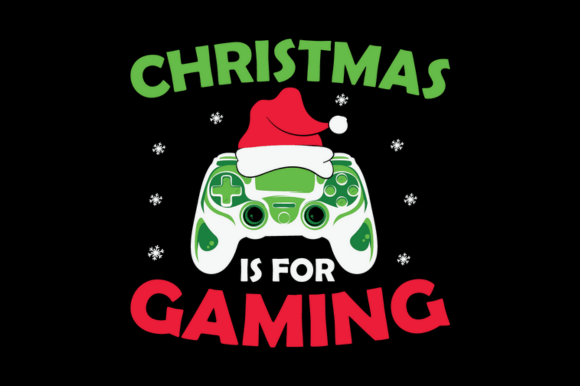
Before you commit to a product line, testing the visual impact is essential. Drop the PNG file onto a t‑shirt mockup in Canva, Photoshop, or Placeit. Change the shirt color, adjust the size, and see if the gaming‑themed motif resonates with your target audience. For mug designs, create a 360‑degree preview using the same PNG. This early phase saves materials because you can rule out placements that feel crowded or lose detail at small scales. The Christmas is for Gaming SVG also lets you swap colors easily while still in vector form, so you can audition a neon green version for a retro gaming shirt or a metallic gold for a more refined holiday mug.
During Production and Assembly
This is where the file types start pulling their weight in parallel. You might load the SVG into Silhouette Studio to cut heat-transfer vinyl while a colleague opens the EPS in Adobe Illustrator to prepare a screen‑printing screen. Meanwhile, the DXF could feed a laser engraver setting up a limited run of personalized wooden coasters. Keeping the original source files untouched and working from copies means you can always revert if a setting goes wrong. Many creators label their working files with the production method: “GamingSVG_vinyl_red_5inch,” “GamingEPS_screen_print_front.” That small naming convention prevents confusion when you’re managing multiple orders.
After the Initial Launch
Once your holiday products are live, the design continues to work. The PNG becomes a social media asset for Instagram posts or email newsletters. The PDF serves as a quick attachment for customer proofs or licensing documentation. If a customer requests a custom variation—say, replacing “Christmas” with a family name—the SVG file makes editing simple. You can reuse the same base artwork for next year’s collection by tweaking colors or adding a new element, which cuts down on future design time dramatically.
Practical Implementation Across the Most Common Projects
Rather than talking in generalities, let’s get specific about how the Christmas is for Gaming SVG performs in real‑world applications that many creators, entrepreneurs, and hobbyists actually pursue.
T‑shirt Designs: For vinyl, always use the SVG. Check that your cut lines are clean and that small interior details aren’t too delicate to weed. A gaming controller graphic often has small buttons or text that can lift if the blade pressure is off. Run a test cut on a scrap of vinyl before committing to your good material. For sublimation, use the PNG at 300 DPI. Mirror the image if you’re printing for a heat press, and remember that polyester blends give the brightest results.
Mug Designs: Most mug presses or sublimation ovens work with high‑res PNG files. Place the graphic on a mug template (usually 8.5×3 inches for 11oz mugs) and ensure the design doesn’t wrap so far that text becomes unreadable. If you’re using an engraving setup, the DXF or SVG can drive the rotary engraver. Practice aligning the center of the design with the mug handle for a professional finish.
Digital Downloads and Printables: The clean PDF or high‑quality PNG makes a ready‑to‑print file for Etsy sellers or membership sites. You can combine the gaming graphic with a calendar layout, a party invitation, or a gaming room printable. Keep the file size manageable but resolution high enough for crisp printing at letter or A4 size. Adding a simple instruction sheet as a separate PDF shows customers you’ve thought through their experience.
Crafts and Cards: Cut the SVG from cardstock to create layered 3D cards. Use the PNG to print a flat holiday card with a gaming twist, then stick it onto a craft paper base. For scrapbooking, the design can be scaled down to fit a 4×6 photo spread. The EPS is handy if you’re sending the design to a professional printer for bulk card orders—many print houses work natively with it.
Home Décor and Signage: If you own a CNC or laser cutter, the DXF file gives you tool‑ready geometry. Engraving the design on a wooden plank and painting the recessed areas creates a rustic gamer den sign. The SVG can be used with adhesive vinyl to apply the design to a canvas, then sealed for durability. In these projects, material thickness and machine speed settings become the main variables; having an accurate vector file means the design itself won’t be the bottleneck.
Keeping Your Workflow Organized and Efficient
An asset like the Christmas is for Gaming SVG often multiplies into dozens of project files. Without some upfront organization, you’ll spend more time searching than creating. Create a master folder named after the design—say, Christmas_Gaming_Design_Master—and inside it place subfolders: Original_Files, Working_Versions, Mockups, and Production_Outputs. Move the original SVG, PNG, DXF, EPS, and PDF into the Original_Files folder immediately after download. Back that folder up to a cloud service or external drive. Then, for each new project, copy the relevant format into Working_Versions and rename it with the project details.
This habit follows a simple rule: never edit the only copy. If a client later asks for a slightly different colorway, you won’t have to download the files again or rebuild from memory. You’ll pull from Original_Files, make a new working copy, and move forward. Over months and years, this approach keeps hundreds of design projects untangled.
Ensuring Consistent Quality Across Print, Screen, and Material
Quality control often trips up creators when they switch between digital and physical outputs. A design that looks perfect on a bright monitor can emerge washed out on a mug or jagged on a shirt transfer. With the Christmas is for Gaming SVG, you can mitigate these issues by matching resolution, color space, and file preparation to the medium.
For print projects, always confirm that your PNG is at least 300 dots per inch at the intended print size. If the file is smaller, upscaling can introduce blur. Since SVG and EPS files are resolution‑independent, use them whenever possible for physical products. When working with vinyl, check for thin connecting lines—the “stencil” effect—that might tear during weeding. Some designs include intentionally floating interior pieces; if that’s the case, you may need to add tiny bridges in your cutting software.
For sublimation, remember that colors shift when heated. Light grays and pastels can become muddy. Printing a small test swatch on a piece of polyester fabric before pressing the final product helps you tweak the colors in your software. If you’re selling digitally, provide a high‑quality JPEG preview with a watermark, but deliver the original PNG or PDF at full resolution. This small step gives buyers confidence in what they’re receiving while protecting your work.
Long‑Term Use and Adaptation for Non‑Holiday Projects
One of the smartest ways to extend the value of the Christmas is for Gaming SVG is to look at its components beyond the holiday season. The gaming emblem or controller silhouette, separate from the Christmas typography, can become a standalone design element. In vector form, you can easily detach the holiday text and use the remaining graphic for birthday shirts, esports team jerseys, or gaming room wall stickers. The design you buy in November can pay for itself again in March with a simple text swap.
This kind of modular thinking is common among experienced designers and makers. They build a library of reusable graphic elements that combine into fresh layouts with minimal effort. The EPS and SVG files are especially suited to this because you can import just the vector layer you need into a new document without disturbing the original grouping. Keep notes on which software handled the files best. For example, you might record that Inkscape opened the SVG with perfect layering, while a particular Cricut update required a slight margin adjustment. Those notes become part of your internal knowledge base, speeding up every future project that uses a similar file.
Integrating the Design Smoothly Into a Team or Multi‑Step Process
If you’re not working alone—maybe you employ a virtual assistant, work with a local print shop, or collaborate with a heat‑press technician—clear file communication becomes critical. Send the print shop the EPS or high‑quality PDF, not a screenshot. Include a simple text document that lists the file name, the intended product, dimensions, and any color specifications (PMS codes if you have them). This cuts down on back‑and‑forth emails and ensures the final product matches your vision.
For teams using cloud storage, set sharing permissions so that the master folder is view‑only, while a team working folder allows editing. This prevents accidental overwrites of your original files. The Christmas is for Gaming SVG might be forwarded three or four times during a production run—from you to a designer to a printing company—so embedding identification in the file name (like ChristmasGamingShirt_SVG_DesignerA_v2) keeps everyone oriented.
When integrating the design with other assets, such as background patterns, sponsor logos, or website templates, test the colors and contrast under different lighting conditions. A design that pops on a white t‑shirt may disappear on a dark background unless you add a stroke or adjust the fill. Because you have the vector original, you can make non‑destructive edits quickly. The EPS can be placed into InDesign for a product catalog, while the PNG sits in an email campaign banner. The more consistent your base file is across these touchpoints, the more professional your brand appears.
Overall, the Christmas is for Gaming SVG isn’t just a one‑time graphic. It’s a multi‑format toolkit that rewards a methodical approach. By connecting each file type to a specific purpose, organizing your projects, and maintaining a small set of quality checks, you turn a seasonal design into a reliable asset that works across t‑shirts, mugs, digital downloads, crafts, cards, and far beyond. Whether you’re preparing for a holiday craft fair, stocking your online store, or making gifts for friends, the key is to treat the files as components in a process, not as a single finished product. That perspective changes how you design, produce, and ultimately succeed with every new project.