Mastering Precision Game Card Boxes Through Laser Cut Design
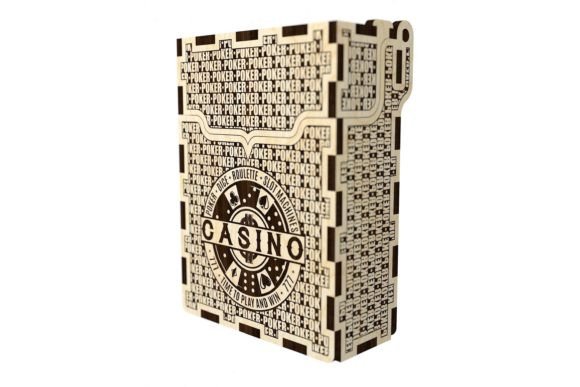
Small-format storage solutions for collectible and trading cards demand an intersection of precision, durability, and aesthetic appeal. When you work with laser-cut fabrication, the difference between a box that fits perfectly and one that frustrates the user often comes down to fractions of a millimeter. The internal cavity designed to accommodate standard 2.5 by 3.5 inch gaming cards requires exacting geometry—particularly when the resting dimensions target 25 x 93 x 65 mm internally, creating a snug housing that protects cards without bending corners or applying unwanted pressure to sleeves.
The Geometry Behind a Perfectly Engineered Card Enclosure
Laser-cut box construction relies on tab-and-slot assembly principles that transform flat sheet material into a rigid three-dimensional form. The interlocking finger joints, sometimes called comb joints, distribute mechanical stress evenly across connection points. For a card box designed around the 2.5 by 3.5 inch card footprint, the internal cavity must account for slight variations in card thickness when sleeved, plus a margin of breathing room that prevents friction damage during insertion and removal. The stated internal clearance of 93 mm along the long axis provides approximately 4 mm of extra space beyond the card width, while the 65 mm depth gives cards enough floor space to sit without compression.
What separates a generic box from a purpose-built gaming card enclosure is this deliberate spacing. Too tight, and double-sleeved commander decks won't fit. Too loose, and cards shift during transport, potentially wearing edges against the interior walls. The sweet spot achieved by the 25 x 93 x 65 mm internal envelope reflects iterative testing across multiple card games, sleeve brands, and storage scenarios.
Understanding the Digital Fabrication Files and Their Roles
A comprehensive laser-cut project relies on vector data that communicates cut paths, engraving zones, and scoring lines to the machine controller. The digital package typically bundles multiple formats because different software ecosystems and machine drivers prefer specific file types. Here is how each format contributes to the production pipeline:
- DXF (Drawing Exchange Format) — Serves as the universal interchange format for CAD applications. The DXF file preserves layer organization, allowing fabricators to separate cut lines from engraving features. Most laser cutter control software imports DXF directly, making this the primary production file for many workshops.
- DWG — The native AutoCAD format retains full parametric information and is preferred by professional designers who may need to modify tab dimensions or adjust kerf compensation values before export.
- CDR 11 (CorelDRAW version 11) — Remains widely used in sign-making and laser engraving communities. The backward compatibility to version 11 ensures the file opens reliably on older shop computers that may not receive regular software updates.
- SVG — Scalable Vector Graphics work natively with browser-based design tools and open-source vector editors. The human-readable XML structure makes SVG popular for makers who want to understand or tweak path data without proprietary software.
- PDF — Functions as a reference document and a print-ready layout. While not always ideal for direct machine import, the PDF provides a reliable way to check dimensions, print templates for manual layout, or share the design with collaborators who lack CAD tools.
Having access to all five formats eliminates the friction of file conversion, which can introduce scaling errors, lost layers, or path corruption. Each format serves a distinct stage of the workflow—from design refinement through production to archival documentation.
Material Selection and Thickness Considerations
The digital cut files are structured around three common material thicknesses: 3 mm, 4 mm, and 1/8 inch (approximately 3.175 mm). These values represent the standard offerings from plywood and MDF suppliers worldwide. The design accounts for each thickness by adjusting tab widths and slot lengths accordingly, ensuring that the same core geometry works regardless of which sheet material the maker prefers.
Plywood, particularly birch ply, offers a warm organic finish with visible grain patterns that elevate the presentation of a handmade card box. Baltic birch in 3 mm or 4 mm thickness cuts cleanly with minimal charring when laser parameters are dialed in correctly. The layered edge grain, visible on finger joints, becomes a design feature rather than something to hide. For painted or stained finishes, MDF provides a uniform surface without grain telegraphing through the coating. The 1/8 inch MDF option appeals to makers who prioritize post-processing and want a consistently smooth paint adhesion.
The choice between 3 mm and 4 mm material affects box rigidity noticeably. Thinner 3 mm stock produces a lighter enclosure suitable for single-deck storage. Moving to 4 mm or 1/8 inch adds structural heft that resists warping in humid environments and gives the box a more substantial hand-feel. The interlocking geometry scales appropriately for each thickness because the slot dimensions follow the material parameter rather than remaining fixed.
Compensation Values and Achieving a Tight Assembly
Laser cutting removes material through vaporization, creating a kerf that slightly widens every cut path. Without compensation, the resulting parts fit loosely because each slot becomes marginally wider than designed and each tab becomes marginally narrower. The remedy is deliberate compensation applied to the vector geometry. The recommended 0.15 mm outside compensation for exterior contours pushes the cut line outward, making tabs slightly wider. Conversely, 0.15 mm inside compensation for holes and slots pulls the cut line inward, making openings slightly narrower. The net effect creates an interference fit that holds components together through friction alone, minimizing or eliminating the need for adhesive.
This friction-fit approach changes the assembly experience substantially. Parts snap together with satisfying tactile feedback, and the box can often be dry-assembled to check alignment before committing to glue. For makers who do choose to add adhesive, the tight joint tolerances mean that glue lines remain thin and nearly invisible. The 0.15 mm value represents a starting point—different laser tubes, focal lengths, and material densities may require fine-tuning, but the pre-compensated files give fabricators a proven baseline that works across common desktop and industrial CO2 laser systems.
Assembly Logic and Structural Design Features
The box assembles from flat panels that interlock around the base and lid. The bottom panel typically features tabs on all four edges that engage with corresponding slots in the side and end pieces, creating a rigid foundation. The side walls may incorporate additional locking features that prevent racking—the parallelogram deformation that can occur when a box is twisted diagonally. Lid design varies by aesthetic preference; some makers prefer a friction-fit lift-off lid, while others opt for a hinged design using a living hinge pattern or separate hardware.
Because the internal cavity was shaped specifically for 2.5 by 3.5 inch cards, the box accommodates standard trading card games, including collectible card games where players build decks of varying sizes. A single box might hold 60 to 100 sleeved cards depending on sleeve thickness and whether the cards are double-sleeved. The 25 mm internal height allows for a single stack or two smaller stacks side by side, giving users flexibility in how they organize their collection.
Customization Pathways for Different User Groups
The base vector model serves as a canvas for personalization. Engraving areas on the lid accept custom artwork, game logos, family crests, or personal monograms. Makers operating laser engravers can add surface textures through raster engraving patterns that transform a plain plywood surface into something tactile and visually complex. The flat panel construction means that each face can be engraved before assembly, when the material lies flat on the laser bed—far easier than trying to engrave an already-assembled box.
For small businesses offering custom gaming accessories, the consistent file format package means that production can scale from one-off commissions to batch runs. The vector files can be nested efficiently onto sheet material to minimize waste, and the repeatable assembly process yields consistent results across dozens or hundreds of units. Educators teaching design and fabrication find the project valuable because it demonstrates practical applications of geometric dimensioning, material properties, and manufacturing tolerances in a tangible product that students can use.
Researchers exploring parametric design can modify the source geometry to create variants for non-standard card sizes, adding dividers, or integrating compartments for dice, tokens, and counters. Because the DXF and DWG formats preserve editable geometry rather than flattened paths, parametric adjustments propagate cleanly through the design without breaking the interlocking relationships between parts.
Practical Production Notes and Workflow Optimization
When preparing files for the laser cutter, ordering operations matters. Interior cuts should generally execute before exterior cuts so that the part remains attached to the stock sheet until the final moment, reducing movement that could misalign subsequent cuts. Engraving runs first in most workflows because it requires lower power and the material surface must be pristine. Some laser control software allows automated sequencing based on color-mapped layers, while others require manual ordering of the cut list.
Focus calibration is especially important when cutting 3 mm or 4 mm material. The focal point should sit at or slightly below the material surface for clean vertical edges. MDF tends to cut with more charring than plywood at equivalent settings, so air assist becomes important for keeping the cut path clear of debris and reducing scorch marks on the surface. Masking tape applied before cutting can protect surfaces from smoke staining, particularly on light-colored birch plywood.
Post-processing steps might include light sanding to remove any residual burrs at the cut edges, application of a clear finish to protect the wood, or painting for color-coordinated storage systems. The finger joints, when properly compensated, require only a thin application of wood glue spread with a small brush or toothpick to avoid squeeze-out that mars the surface. Rubber bands or light clamping during curing ensures joints seat fully.
Why Digital Vector Models Transform the Maker Experience
Purchasing a ready-to-cut vector model eliminates the most time-intensive phase of any laser project: the design and testing cycle. Developing interlocking geometry from scratch involves multiple prototype iterations to dial in kerf compensation, confirm fit, and adjust aesthetics. The availability of a tested, production-proven file set means that makers can proceed directly to material preparation and cutting, confident that the result will assemble correctly on the first attempt. This acceleration matters for commercial operations where machine time represents revenue, and for hobbyists whose workshop hours are limited.
The inclusion of older format versions such as CDR 11 reflects an understanding that not every workshop runs the latest software. Compatibility with legacy equipment broadens the accessible user base, ensuring that the files remain usable across community makerspaces, school fabrication labs, and home workshops with varying levels of technological investment.
For those exploring laser cutting as a fabrication method for the first time, a well-structured card box project provides an accessible entry point. The flat-pack assembly concept is intuitive, the feedback from properly fitted joints is immediate, and the finished product has genuine utility. The progression from digital file to physical object demystifies the manufacturing process and builds confidence for tackling more complex designs.